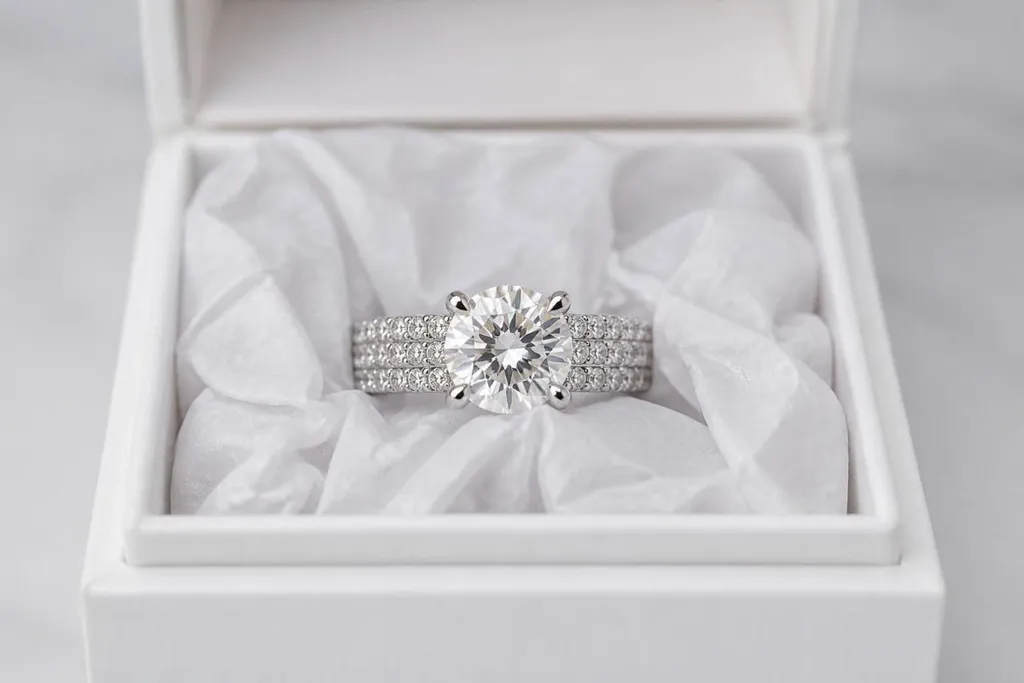
A pavé band can transform an engagement ring by carrying brilliance beyond the centre stone and onto the shoulders. A triple-pavé treatment takes that idea further, using multiple rows of small diamonds to create a richer surface of light. The effect is noticeably more luxurious than a plain or single-row band, yet careful proportions can keep the centre diamond firmly in focus. On a relatively slender 1.85mm band, the appeal comes from concentrating fine detail into a compact area rather than simply making the shank wider.
For someone who wants a more diamond-intensive finish, this upgrade provides a distinctive alternative to conventional shoulder detailing. The important decision is not simply whether more sparkle is desirable, but whether the scale of the centre stone, band and additional pavé work together as a coherent engagement-ring design.
What Triple Pavé Adds to the Band
Traditional pavé uses small diamonds set closely together so that relatively little metal is visible between them. A single row creates a fine line of brilliance along the band. Multiple rows change both the intensity and texture.
With triple pavé, light is reflected from several closely arranged lines of stones. As the hand moves, this can create a more continuous shimmering effect across the visible surface of the shank.
The result is particularly effective for someone who finds a plain solitaire too restrained but does not necessarily want a conventional halo around the centre stone. Instead of expanding the centre setting, the additional detail remains concentrated on the band.
This distinction affects the overall silhouette. The centre diamond can retain its clearly defined outline while the shoulders provide a much stronger supporting presence.
A 1.85mm band also keeps the proportions relatively refined, allowing intricate stone setting to provide impact without relying on excessive physical width.
Balancing Multi-Row Sparkle With the Centre Stone
A diamond-set band should complement the centre rather than visually compete with it.
The centre-stone scale is therefore worth considering carefully. A larger diamond naturally has enough presence to sit comfortably above highly detailed shoulders. Someone selecting a 2-carat centre, for example, may prefer triple pavé because the additional band sparkle feels proportionate to the stone's stronger visual scale.
That does not mean a smaller centre cannot work. The key is the overall balance of the setting. Fine pavé diamonds can create a delicate field of brilliance rather than a heavy frame, allowing a more modest centre stone to remain distinct.
Shape also influences the relationship. Elongated oval, pear and marquise diamonds extend along the finger, naturally creating contrast with horizontal band detailing. Round stones offer strong central symmetry, while emerald and radiant cuts introduce crisp geometry against the finer texture of pavé.
The best combination is not necessarily the one with the highest total carat weight. It is the one where the eye still understands immediately which stone is intended to lead the design.
How Metal Choice Influences the Effect
Triple pavé places diamonds across a greater proportion of the visible band, making metal colour an important design consideration.
White gold or platinum can visually recede around colourless pavé stones. This creates a bright, relatively seamless surface where individual metal boundaries become less obvious.
Yellow gold offers a different character. Tiny flashes of warm metal between the diamonds can emphasise the craftsmanship of the setting while creating contrast with their colourless brilliance.
Rose gold produces a softer, more romantic interpretation and can prevent an intensely diamond-set band from feeling overly cool.
The centre setting does not necessarily have to use the same visual treatment. A two-tone approach, for example, can combine a warm band with white-toned claws around the centre diamond. What matters is that the metals and pavé appear intentional rather than competing for attention.
Everyday Wear and Maintenance
A triple-pavé band contains many small individually set diamonds, so sensible care is particularly important.
Hand creams, soap and everyday residue can accumulate between the stones and reduce their brilliance. Gentle regular cleaning helps maintain the multi-row sparkle that defines the design.
The small settings should also be professionally inspected periodically. Fine pavé work is designed for wear, but repeated hard knocks or abrasive activities can place unnecessary stress on delicate components.
Wedding-band pairing deserves thought too. A heavily diamond-set engagement ring may look best with a restrained plain band, allowing the triple pavé to remain distinctive. Alternatively, another diamond-set band can create an intentionally high-brilliance bridal stack.
Comfort and spacing between the rings should be considered alongside appearance.
Final Thought
Triple pavé is a confident choice for someone who wants the engagement-ring band to contribute significantly to the overall brilliance of the design. Multiple rows create texture and movement while a refined band width helps prevent the setting from becoming unnecessarily heavy.
Used with the right centre-stone proportions and metal choice, the result can feel luxurious rather than excessive. It is an upgrade designed not simply to add more diamonds, but to make the entire shank an active part of the ring's visual impact.