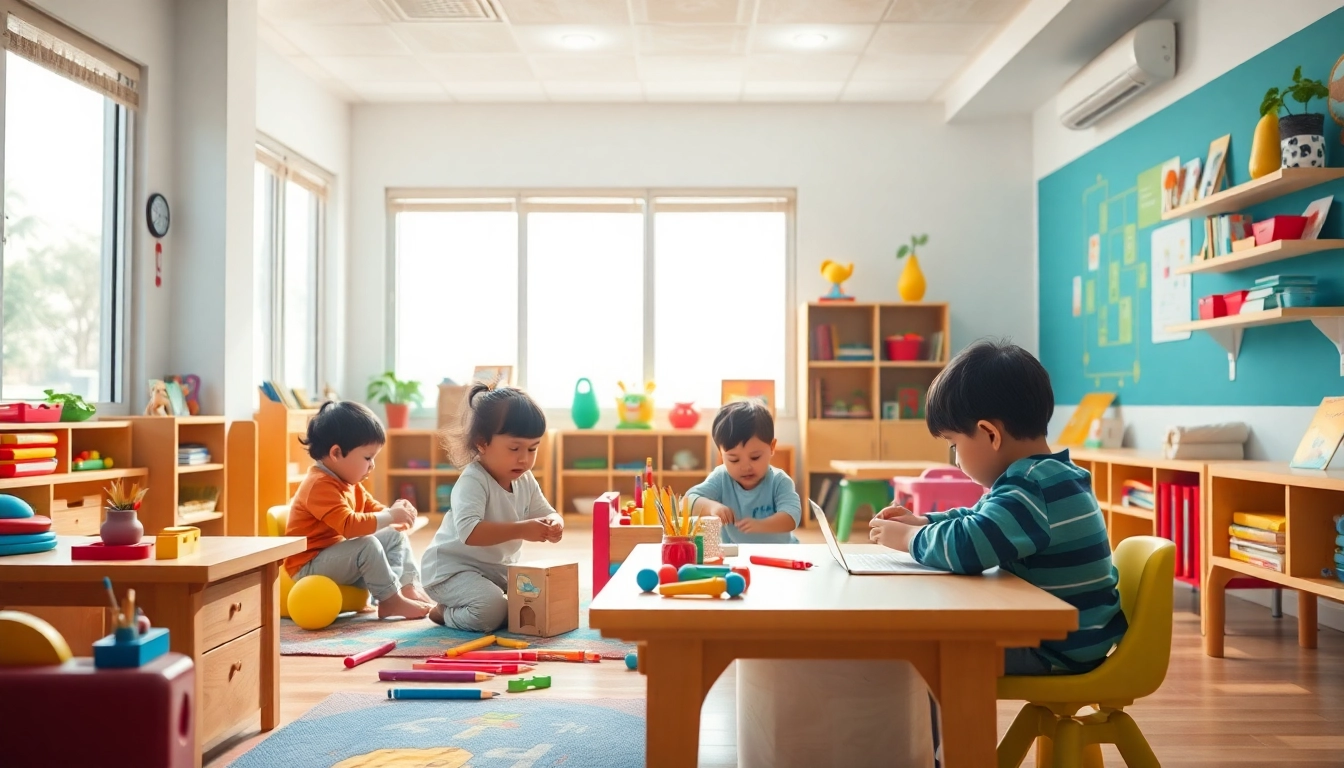
Understanding Early Childhood Education
What is Early Childhood Education?
Early Childhood Education (ECE) refers to the period of learning that takes place typically from birth to eight years old. This crucial stage is characterized by rapid development, where foundational skills in cognitive, social, and emotional areas are established. Programs focused on ECE provide children with a structured environment where they can engage in play-based learning, leading to improved outcomes later in life. Through well-designed curricula, children are encouraged to explore, ask questions, and develop a love for learning that can last a lifetime. With increasing awareness of the significance of this stage, many parents are actively seeking quality preschool options like those available at https://kara.in/.
Benefits of Preschool for Young Children
Preschool plays an essential role in a child's development, offering numerous benefits that extend beyond basic education. First and foremost, preschool helps to socialize young children, exposing them to peers and structured group interactions. This exposure fosters essential social skills like sharing, teamwork, and communication.
Cognitive development is another significant advantage; preschool-age children are introduced to vocabulary, numbers, and concepts that enhance their intellectual growth. Moreover, preschool programs often emphasize emotional development by teaching children to express feelings and resolve conflicts constructively. Children who attend preschool are often noted to have better adjustment to formal schooling and achieve higher academic success in their later years.
Developmental Milestones and Learning
Each child develops at their unique pace; however, there are common developmental milestones that educators and parents can look for as indicators of progress. By age three, most children can communicate in simple sentences, recognize common objects, and begin to play cooperatively. By age four, they typically exhibit increased curiosity, can follow simple instructions, and show an understanding of basic concepts like numbers and colors.
Effective preschools closely monitor these developmental milestones and tailor their educational activities to meet the children’s needs. Activities are designed not just for academic learning but also to promote critical life skills, enhancing physical, emotional, and intellectual growth. Engaging young learners in interactive ways, such as through storytelling, arts and crafts, and outdoor play, keeps their interest alive while fostering a broad range of skills.
Choosing the Right Daycare in Koramangala
Key Factors to Consider When Selecting a Preschool
Deciding on the right preschool for your child can be a challenging process. Key factors to consider include the school's curriculum, teacher qualifications, and overall class size. A play-based learning curriculum, which emphasizes exploration and engagement, is often highly beneficial for young children.
Another crucial aspect to consider is the qualifications and experience of the educators. Highly trained teachers can create a warm, nurturing environment that fosters children's natural curiosity. Class size also plays a significant role, as smaller teacher-to-child ratios generally allow for more individualized attention and support.
Importance of Local Community Engagement
Community engagement in early childhood education creates a supportive network for families and children. A local preschool often better understands the community's cultural and social dynamics, allowing for programs that resonate with local families. This can enhance parental involvement and create a sense of belonging among families.
By prioritizing local community engagement, preschools can also introduce children to local traditions, histories, and values, enriching their learning experience while promoting respect for diverse backgrounds. Involvement in community activities can also facilitate children's social skills as they interact with various members of the community.
Questions to Ask During a Preschool Tour
When visiting potential preschools, parents should prepare thoughtful questions to ensure the environment meets their child's needs. Ask about the types of learning experiences provided daily and how the curriculum integrates play with educational content. Inquire about safety protocols and how they ensure a secure environment for the children.
Furthermore, understanding how the school communicates with parents is essential. Ask about the frequency and methods of communication, such as newsletters or parent-teacher meetings. Investigating teacher qualifications and ongoing professional development can also provide insight into the school's commitment to high educational standards.
Curriculum Structure and Activities
Exploring Play-Based Learning
Play-based learning is an educational approach that prioritizes children's natural inclination to play as a way to learn. In this method, activities are designed to help children acquire skills through structured play experiences. For instance, by playing with blocks, children can learn about shapes, balance, and cooperation, without the formal structure of a traditional classroom setting.
Preschools employing play-based learning encourage creativity and curiosity. Children are often more engaged when allowed to explore different materials and activities at their own pace. Observations and guided interactions by teachers further help shape the learning experiences, giving children the freedom to express their thoughts and ideas.
Integrating Creativity into Daily Routines
Creativity is a critical component of early childhood education. Introducing creative activities, such as art, music, and dance, promotes cognitive development and emotional well-being. These activities not only foster imagination but help children develop critical thinking skills and learn to appreciate various forms of expression.
Incorporating creativity into daily routines can be as simple as integrating arts and crafts into regular activities or using songs and movement to teach concepts like counting and the alphabet. Creating an environment conducive to creative exploration encourages children to take risks and express themselves confidently.
Balancing Structured and Free Play
It's vital for preschools to strike a balance between structured play and free play. Structured activities help children learn specific skills and concepts, whereas free play allows them to pursue their interests and develop autonomy. Quality preschool programs recognize the importance of both types of play and design their daily schedules to accommodate this balance.
For example, a typical day might involve a mix of guided circle time, where educators teach, followed by unstructured block-building sessions that allow children to explore and create freely. This combination nurtures a holistic learning experience, enabling children to develop uniformly across various learning domains.
Culture and Environment of Kara4Kids
Creating a Safe and Nurturing Atmosphere
The environment in which a child learns is just as important as the curriculum itself. At Kara4Kids, a commitment to providing a safe, nurturing atmosphere is paramount. The facilities are designed to ensure children feel secure and comfortable, with soft furnishings, ample outdoor space for play, and inviting classrooms that stimulate curiosity and exploration.
Safety measures include secure entrances, thorough background checks for staff, and regular safety drills, all contributing to peace of mind for parents. Moreover, fostering a nurturing atmosphere involves building strong relationships between staff and children, where every child feels valued and supported in their learning journey.
Diversity and Inclusion Practices
Embracing diversity and inclusion within the preschool setting helps promote understanding and respect among children. It prepares them for a multicultural world by teaching them to appreciate differences and similarities among their peers. At Kara4Kids, a focus on inclusivity is evident in the curriculum, which reflects various cultures and encourages celebrations of different traditions.
Through diverse stories, activities, and interactions with peers from various backgrounds, children learn to embrace the richness brought by diversity. This foundation not only aids in personal development but also helps cultivate empathy and understanding that extends beyond the preschool experience.
Feedback and Communication with Parents
Establishing strong communication between staff and parents is essential for a positive preschool experience. At Kara4Kids, parents are encouraged to participate in their child’s education through regular feedback opportunities, parent-teacher meetings, and open communication lines.
Regular updates on children's progress not only help parents understand curricula but also enable collaborative efforts in fostering a child's growth. Approaches to feedback include parent surveys, suggestion boxes, and informal check-ins, ensuring that the preschool is continually evolving to meet the needs of both children and their families.
Frequently Asked Questions
What age should I enroll my child in preschool?
It’s ideal to enroll your child around ages 3-4, as many preschools cater to this age range, preparing them for kindergarten.
How do I know if the preschool is safe?
Look for safety protocols, trained staff, secure access, and positive reviews. Visiting the facility for a personal assessment is also beneficial.
Are meals provided at Kara4Kids?
Yes, we offer healthy meal options designed for young children to promote good nutrition, ensuring they have the energy to learn and play.
Can I visit preschool before enrolling?
Absolutely! We encourage tours for parents to explore our facilities and meet our teachers, which aids in informed decision-making.
What is the teacher-to-child ratio?
Our preschool maintains a low teacher-to-child ratio, allowing for personalized attention and care that caters to each child's unique needs.