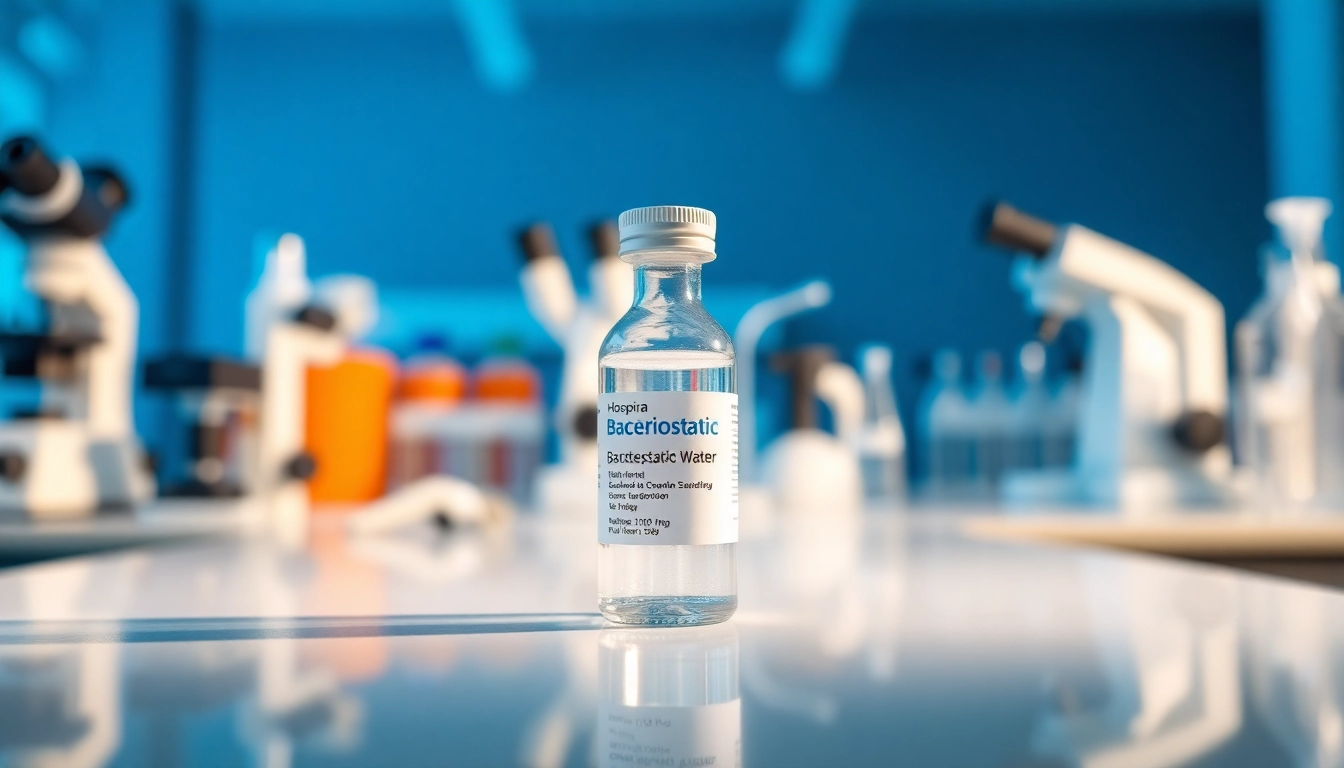
Introduction to Bacteriostatic Water
Bacteriostatic water is an essential component within various scientific and medical frameworks, primarily employed to dissolve or dilute medications before administration. This sterile water contains a bacteriostatic agent, typically benzyl alcohol, that prevents the growth of bacteria, allowing for longer shelf life once the product is opened. Specifically, hospira bacteriostatic water is one of the prominent formulations used in laboratories and clinical settings. It not only enhances the safety profile of injectable drugs but also facilitates proper drug formulation and administration, showcasing its pivotal role in healthcare and research laboratories.
What is Bacteriostatic Water?
Bacteriostatic water is a sterile water formulation specifically designed to be used in the medical and research settings for dissolving or diluting injectable medications. The presence of a bacteriostatic agent, such as benzyl alcohol, serves to inhibit the growth of harmful microorganisms without compromising the efficacy of the medication. While it is commonly used in various applications, one must understand the specific context to ensure safe and effective use. It is particularly crucial in situations where the solution may be stored and administered over extended periods.
Key Ingredients and Properties
The primary component of bacteriostatic water is sterile water, which maintains high purity levels. The bacteriostatic agent, benzyl alcohol, typically comprises 0.9% of the solution. This concentration is sufficient to inhibit microbial growth while being safe for human administration when diluted properly. The properties of bacteriostatic water allow it to maintain an isotonic state, ensuring that it does not cause harm to cells when introduced into the body or mixed with other compounds.
Importance in Research Laboratories
In research laboratories, bacteriostatic water proves invaluable for a multitude of applications, particularly when handling peptides, vaccines, or other biological substances that require meticulous care during preparation. Its utilizations extend beyond mere dissolution; researchers leverage its stability and sterility to maintain the integrity of sensitive solutions, thus avoiding degradation and contamination that might otherwise compromise research outcomes. The adoption of bacteriostatic water in manufacturing processes further emphasizes its significance in achieving reproducible and reliable results in various studies.
Common Applications of Bacteriostatic Water
Mixing with Peptides
One of the most prevalent applications of bacteriostatic water lies in the realm of peptide research and therapy. Many peptides, due to their biological activity and sensitivity, must be handled with care. When mixing peptides with bacteriostatic water, researchers can achieve the correct concentration for various applications, from research to clinical therapies. Using bacteriostatic water in this context serves to extend the storage life of the peptides and ensures that they remain free from harmful microbial contamination.
Dilution Processes in Experimental Setups
In experimental setups, accurate concentrations of solutions are paramount for successful outcomes. Bacteriostatic water allows researchers to effortlessly dilute various compounds while maintaining sterility. This is particularly crucial in assays where standardization of concentration affects the yield and reliability of results. The ability to manage dilution processes effectively using bacteriostatic water enhances the precision of experimental designs, ultimately leading to more credible and reproducible results.
Preservation of Reagents
The preservation of biological reagents is a significant concern in laboratory settings. By utilizing bacteriostatic water, laboratory professionals can extend the shelf life of critical reagents by preventing bacterial growth and subsequent degradation. This is especially important for reagents used in diagnostic tests, where the longevity and reliability of the compounds are essential for accurate results. The interplay of bacteriostatic properties with storage conditions determines the effectiveness of experiments and assays over time.
Best Practices for Handling Bacteriostatic Water
Storage Guidelines
Correct storage of bacteriostatic water is vital to maintaining its efficacy. It should be kept in a cool, dry place, away from direct light, which may degrade its components. Refrigeration is generally not necessary for unopened containers, but once opened, it is often recommended to store the product in the refrigerator to prolong its shelf life. Follow the manufacturer's guidelines for specific storage recommendations to ensure optimal conditions.
Safe Usage Protocols
When utilizing bacteriostatic water, researchers and clinicians should always employ aseptic techniques to prevent contamination. This involves using sterile syringes and needles, along with sanitizing workspaces before any manipulations. Proper disposal of any used materials is also essential in minimizing the risk of cross-contamination and ensuring safety within the laboratory environment. Regular training on safe handling practices further enhances the overall safety of the processes involved.
Contamination Prevention
Preventing contamination of bacteriostatic water is a primary concern during usage. To mitigate risks, individuals should refrain from touching the tips of syringes or needles that will come into contact with the solution. Additionally, minimizing the opening time of the container and avoiding the use of products beyond their expiration dates are crucial practices. Regularly inspecting the solution for cloudiness, discoloration, or particulate matter is also advised to maintain quality and safety before any applications.
Comparing Bacteriostatic Water with Other Solvents
Advantages of Bacteriostatic Water
Bacteriostatic water offers several advantages over other solvents such as saline and distilled water, primarily due to its ability to prevent bacterial growth. This characteristic significantly reduces the risk of infections when used in injections. Additionally, bacteriostatic water maintains its sterility over longer periods after opening compared to saline solutions, making it a preferred choice for various applications in laboratories and clinical settings. Its compatibility with a wide range of medications further enhances its usability and effectiveness.
Common Alternatives and Their Limitations
Common alternatives to bacteriostatic water include sterile saline and distilled water. However, sterile saline typically lacks the bacteriostatic properties, leading to shorter usability spans once opened. Distilled water, while pure, is also not designed for use with medications as its lack of preservatives can allow for microbial growth. These limitations render bacteriostatic water the superior choice for dissolving and preparing injectable solutions, confirming its distinct advantages within research and clinical settings.
Decision-Making for Researchers
Researchers must assess several criteria when choosing between bacteriostatic water and other solvents for their applications. Factors such as the intended use of the solution, the stability of the active ingredients, and any regulatory requirements should guide their decisions. It is crucial to consider how the solvent will affect the integrity and efficacy of the compounds, and whether the added preservatives will interact with the substance being dissolved. By employing a comprehensive checklist and consulting relevant guidelines, researchers can effectively determine the optimal solvent for their specific needs.
FAQs About Bacteriostatic Water in Research
What is bacteriostatic water used for?
Bacteriostatic water is primarily used to dissolve or dilute medications, particularly for injectable therapies. Its antibacterial properties help prolong the solution's usability after opening, making it safe for research and clinical administration.
Can bacteriostatic water be refrigerated?
Yes, bacteriostatic water can be refrigerated, especially after opening, to extend its shelf life. Unopened containers do not require refrigeration but should be stored in a cool, dry place.
How long does bacteriostatic water last?
Unopened bacteriostatic water can last for up to several years, as indicated by the expiration date. Once opened, it is usually recommended to use it within 28 days for optimal safety and efficacy.
Is bacteriostatic water safe for injections?
Yes, bacteriostatic water is considered safe for injections when used as directed. However, it is vital to maintain sterile techniques to prevent contamination during use.
What should I do if I suspect contamination?
If contamination is suspected, do not use the bacteriostatic water. Dispose of it according to safety guidelines, and consider utilizing a new, sterile solution to ensure safety during administration.