Understanding AI Abstract Art Generators
In the rapidly evolving landscape of digital art, AI abstract art generators have emerged as innovative tools that offer creators unique ways to express their artistic vision. These generators leverage advanced algorithms and machine learning techniques to transform simple prompts into complex visual artworks, blurring the lines between technology and creativity. Artists, designers, and hobbyists alike are turning to these tools to explore new dimensions in art creation, making it essential to understand how to use an AI abstract art generator effectively. For those interested in diving deeper, how to use an AI abstract art generator can provide comprehensive insights.
What is an AI Abstract Art Generator?
An AI abstract art generator is a software application that creates unique pieces of abstract art using artificial intelligence. By taking input in the form of text prompts or images, these generators can interpret the data through programmed algorithms and produce visual outputs that reflect the essence of the input. This intersection of technology and artistry opens doors for both seasoned artists and newcomers to experiment and innovate without the traditional barriers of skill and medium.
The Technology Behind AI Art Generation
The technology that drives AI abstract art generators typically involves machine learning, particularly deep learning neural networks. These networks are trained on vast datasets of images, enabling them to learn patterns, styles, and concepts inherent in abstract art. Techniques such as generative adversarial networks (GANs) are often employed, where two neural networks work against each other to enhance the quality and originality of the generated images. This process not only creates stunning visual outputs but also ensures that the art retains an element of surprise and creativity that resonates with the human experience.
Benefits of Using AI in Art Creation
- Speed and Efficiency: AI generators can produce artwork in seconds, allowing artists to explore numerous concepts in a fraction of the time it would take traditionally.
- Accessibility: With AI tools, anyone can create art, irrespective of their skill level. This democratization of art-making encourages more people to express their creativity.
- Inspiration: Artists can use AI-generated pieces as a springboard for their own creations, finding inspiration in the unexpected results generated by the AI.
- Endless Customization: Most generators allow users to tweak settings, such as color schemes and styles, to align the output with their artistic vision.
How to Start with AI Abstract Art Generators
Before diving into the creation process, it’s crucial to set up everything correctly and select the right tools that align with your artistic vision and technical skills. Understanding how to start with AI abstract art generators can streamline your experience and elevate your artwork significantly.
Choosing the Right AI Tool for Your Needs
With a myriad of AI abstract art generators available, choosing the right one can be daunting. Consider the following factors:
- User Interface: Opt for a generator with an intuitive interface that makes it easy to navigate through options and settings.
- Customization Options: Some generators offer a range of styles and effects, while others may be more basic. Choose one that allows enough customization to suit your needs.
- Output Quality: Research the quality of the artworks produced by different generators. Look for user reviews or examples to gauge the potential of the tool.
- Cost: Many AI art generators offer free versions with limited features. Decide if you need premium features that come with a subscription.
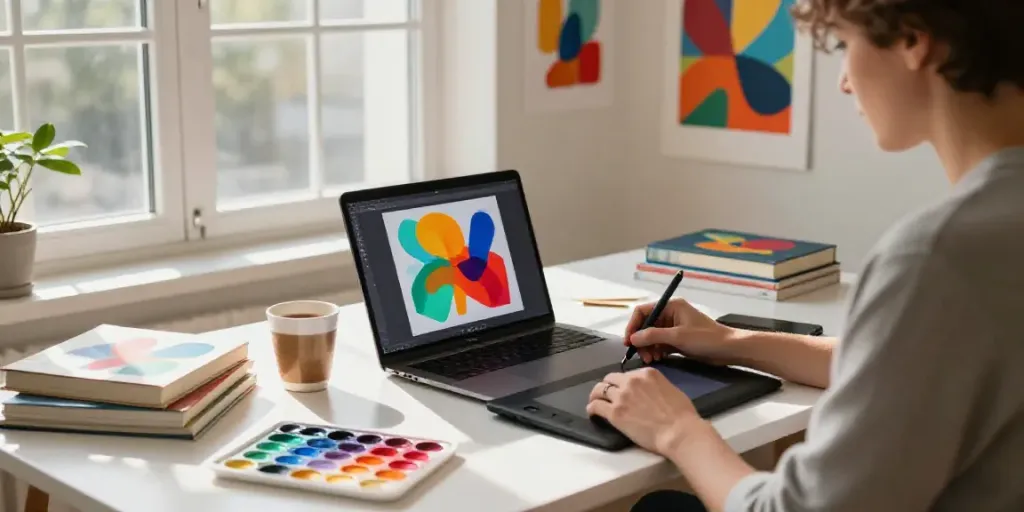
Setting Up Your Workspace for Digital Art
A conducive workspace can significantly enhance your creative flow. Ensure that you have:
- Comfortable Hardware: A reliable computer with a good graphics card can handle high-resolution outputs efficiently.
- Graphics Tablet: Consider using a graphics tablet for finer control when editing generated artworks.
- Software Tools: Familiarize yourself with digital art software, like Adobe Photoshop or GIMP, which can be beneficial for post-processing your AI-generated art.
Essential Tools and Equipment for Beginners
Starting with AI abstract art creation doesn't require expensive equipment. Here are some essential tools to consider:
- High-Speed Internet: Many AI generators are online tools, so a stable connection is crucial for a seamless experience.
- Basic Image Editing Software: Having software at your disposal for enhancements and edits post-generation will help you refine your work.
- Digital Portfolio: Create a space where you can showcase your art, whether through social media or art-sharing platforms.
Crafting Your First AI-Generated Abstract Art
Creating your first piece of AI-generated abstract art can be an exhilarating experience. However, it is essential to approach this process with a clear strategy to maximize the outcome.
Step-by-Step Guide to Using an AI Abstract Art Generator
- Select Your Generator: Choose an AI generator that meets your needs, as discussed in earlier sections.
- Input Your Prompt: Describe the theme or concept you wish to explore. Be as specific as possible to guide the AI effectively.
- Adjust Settings: Customize aspects such as color palettes, textures, and styles to align with your artistic vision.
- Generate Art: Initiate the generation process and wait for the AI to create your piece. This can take anywhere from a few seconds to a few minutes.
- Review and Save: Once generated, review the artwork. Save it in a suitable format, such as JPEG or PNG, for easy sharing or further editing.
Tips for Inputting Effective Prompts
The quality of the generated artwork often hinges on the prompts provided. Here are some tips to enhance your prompts:
- Be Descriptive: Use vivid language that captures the essence of your vision.
- Incorporate Keywords: Include terms that evoke specific styles or emotions, such as “chaotic,” “serene,” or “vibrant.”
- Experiment: Try various prompts to discover unexpected outcomes. This exploration can lead to unique and inspiring results.
Editing and Refining Generated Artwork
Once you have your AI-generated art, consider the following steps for editing:
- Color Correction: Use editing software to adjust colors and enhance vibrancy.
- Layering: Combine multiple generated images to create a composite artwork, adding depth and complexity.
- Final Touches: Add texture, filters, or overlays to give the piece a final polished look.
Common Challenges and Solutions in AI Art Generation
While AI abstract art generation is exciting, it comes with its set of challenges. Understanding these can help you navigate through the process effectively.
Understanding Limitations of AI Art
Despite the capabilities of AI, there are inherent limitations. AI-generated art may lack the emotional depth or intentionality of human-created pieces. Recognizing this distinction can help set realistic expectations.
Addressing Common Misconceptions About AI Art
Many believe that AI art lacks originality, yet it is essential to understand that the output is a unique interpretation of inputs provided by users. AI serves as a tool that complements human creativity rather than replaces it.
Overcoming Creative Blocks When Using AI
Creative blocks can happen even when using AI tools. To overcome this, try the following strategies:
- Change Your Environment: Sometimes, a shift in your workspace can spark new ideas.
- Collaborate: Work with other artists or fellow AI enthusiasts to gain fresh perspectives.
- Take Breaks: Stepping away from the screen can help reset your mind and lead to new insights.
Future Trends in AI Abstract Art Creation
As technology continues to advance, the landscape of AI art generation is bound to change. Keeping an eye on emerging trends can help artists remain at the forefront of this evolution.
Emerging Technologies in AI Art Tools
Developments in neural networks and image processing will likely lead to more sophisticated tools that can understand and interpret more complex artistic concepts. This evolution may empower artists with even greater capabilities.
How AI is Influencing the Art Industry
AI is transforming the art industry by offering new avenues for creation and collaboration. Artists are increasingly integrating AI tools into their workflows, resulting in innovative artworks that challenge traditional norms.
Predictions for AI Art in 2026 and Beyond
By 2026, AI-generated art may become a staple in galleries and exhibitions, showcasing how technology can augment human creativity. As artists and technologists collaborate, we can expect to see masterpieces that blend human intuition with algorithmic precision.
What are the best AI tools for abstract art?
Some of the most popular AI tools for abstract art generation include DeepAI, OpenArt, and Adobe Firefly. Each offers unique features and capabilities, so exploring different options is essential for finding the right fit.
Can AI replace human artists?
While AI can create art, it cannot replicate the emotional depth, context, and personal experiences that human artists imbue in their work. AI is best viewed as a tool that can enhance and inspire human creativity rather than replace it.
How does AI understand art prompts?
AI art generators leverage deep learning models trained on extensive datasets of art to recognize patterns and styles. When users input prompts, the AI interprets these through learned algorithms and generates images based on the interpreted concepts.
Is AI-generated art original?
Yes, AI-generated art can be considered original as the AI creates unique visual outputs from the prompts it receives. However, the originality is contingent upon the user's input and the training data used to develop the AI model.
How to combine traditional and AI art practices?
Artists can blend traditional and AI art practices by using AI-generated images as a foundation for further manual enhancement. Techniques such as painting over AI outputs or collaging them into traditional works can create captivating hybrids.